What We Optimize For, We Become
We measure what matters. Or at least, we think we do.
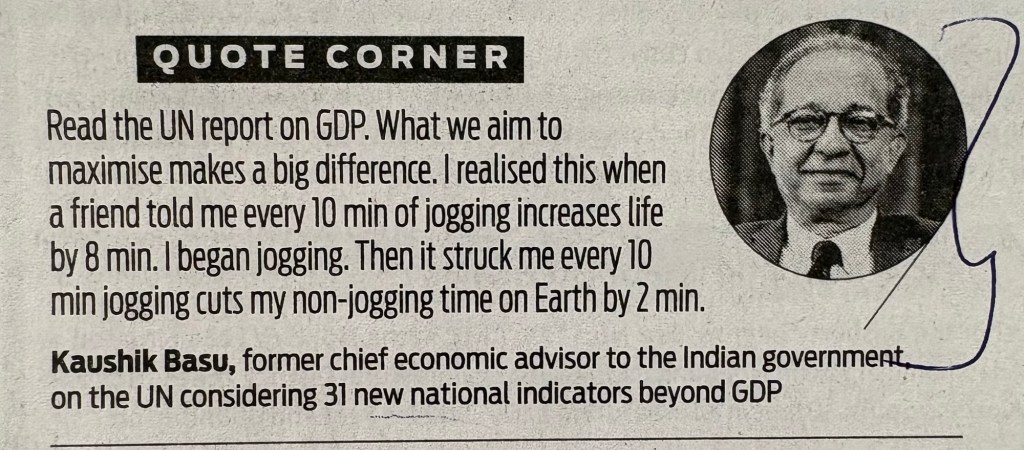
I came across a gem of an observation from Kaushik Basu, former chief economic advisor to the Indian government, and it struck me harder than expected. The insight seems simple on the surface—almost obvious. But like most obvious things, the deeper you look, the more unsettling it becomes.
The observation arrived wrapped in an anecdote: a friend told Basu that every 10 minutes of jogging increases life by 8 minutes. So he started jogging. Then it hit him. Every 10 minutes jogging reduces his non-jogging time on Earth by 2 minutes.
It’s a neat paradox. And it points to something far larger than fitness advice.
The Metric We Choose Becomes Our Master
What we choose to maximize shapes not just our outcomes—it shapes how we live. Every metric we track, every goal we pursue, has ripple effects we rarely see coming. When we optimize for one thing, we inevitably trade off something else. Often something we didn’t know we cared about until it was gone.
This is Basu’s real point, and it’s why he’s been so vocal about rethinking how we measure national progress. GDP counts growth. But what does it miss?
The applications are everywhere:
• Chasing growth metrics can erode the culture that made growth possible in the first place
• Maximizing short-term efficiency can hollow out the long-term resilience that keeps you alive
• Optimizing for busyness—for productivity, for output, for being seen as “busy”—can cost you the presence that makes work feel meaningful
I think of this in the context of my own work. How many conversations have I had that optimized for “getting things done” at the expense of actually listening? How many emails have I written for clarity when a conversation might have built relationship?
The Hard Question
The hard part isn’t setting ambitious targets. The real work is asking: What am I unknowingly sacrificing? What second- and third-order effects am I inviting in by pursuing this metric?
A company that optimizes for customer acquisition might sacrifice customer satisfaction. A team that optimizes for shipping features might sacrifice quality. A person who optimizes for income might sacrifice time with family.
None of these trade-offs are inevitable. But they’re invisible until you name them.
Rethinking What We Count
Basu’s case for 31 new national indicators beyond GDP feels urgent in this light. We need metrics that actually measure what matters—not just what’s easy to count.
But this goes beyond policy. It applies to how we run our teams, our projects, our lives.
What are you optimizing for? More importantly: What are you optimizing against?
The answer might surprise you. And it might be worth changing.


Leave a Reply